
 Language
  Login
Login
First Aid For Puppies
How fast should a puppy grow? How do you potty train him? And is it normal for your puppy to bite into everything? He is picky and will not eat everything! To answer your most important questions, we give you First Aid: First Aid For Puppies.
Help, I have a puppy! Of course it is great fun in the first place to have such a small four-legged friend in the house. Yet you also have to deal with a lot of question marks. Especially if you have a dog as a pet for the first time. For example, how fast should a puppy grow? How do you toilet train him? And is it normal for your puppy to bite everything?
To answer your most important questions, we give you FAFP: First Aid For Puppies
Help, my puppy is peeing in the house
FAFP:Potty training is an important part of puppy education. Certainly in the beginning this takes a lot of time. To keep your puppy from going to the bathroom in the house, it's a good idea to go outside every two hours. In addition, pay close attention to the behavior that your puppy displays. Just before a puddle, dogs often sniff the ground and turn in circles. If you see this happening, it is important to take your puppy outside right away. There you can let him do his business. Reward this behavior with a pat or treat to teach your pup that it is good behavior.
Help, my puppy is biting my shoes
FAFP: It is perfectly normal for puppies to bite and nibble on items in the house. Like babies, they discover the world through their mouth and teeth. If your dog is biting things he shouldn't bite, the best method to get rid of it is to get your dog's attention with something else. For example, have a toy or chew stick ready that you can give to your puppy right away when he chews your shoes. Does your puppy bite you while playing? Then stop the game and stand still. This will prevent biting from becoming a way to get your attention.
Order a FREE puppy pack here
Help, my puppy just keeps growing
FAFP: if your puppy is growing like crazy, that's really only good news. To keep a close eye on its growth, it is important to weigh your puppy regularly and go to the vet for checkups. How fast and how long your puppy grows mainly depends on the breed. Small breeds usually mature around their first birthday, larger breeds grow for 18-24 months. The breeder can tell you more about the desired growth of your puppy. In any case, make sure that your puppy gets good food that supports development during the growth phase.
Help, my puppy is fussy
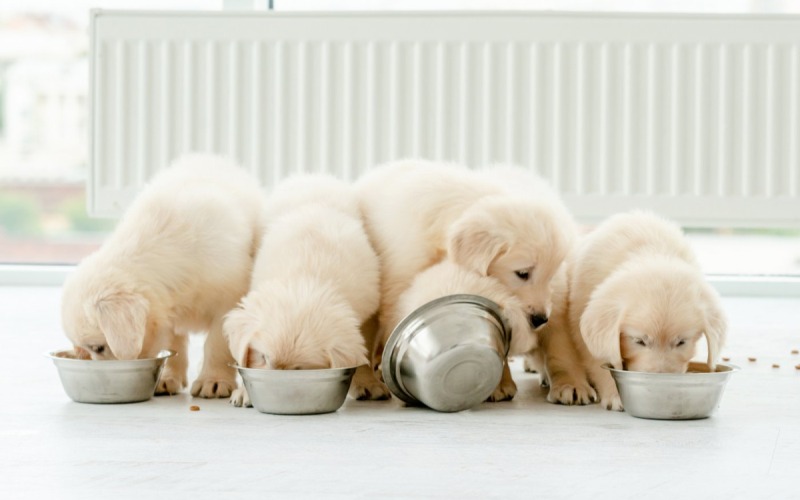
FAFP: one dog eats everything you give him, the other gets his sensitive nose for the very best brand food. First of all, if you have a picky puppy, it is good to find out if there is a medical cause for it. Gum infections or problems with the stomach and intestines can keep your puppy from wanting to eat. If everything is okay, you can try to unlearn the picky behavior. You do this by always allowing the food to stand for half an hour, and then removing it. Just try again later in the day. Usually the appetite is so great that your dog starts eating anyway.
Help, my puppy has gone wild
FAFP: a puppy who runs criss-cross around the room, jumps up against you and takes off when lightning strikes. You almost wonder if he's gone mad ... Don't worry, these are the crazy 10 minutes. Almost every dog ​​has moments when it really gets loose. They swing their toys around, sit still and a little later sprint away at full speed and chase their own tail. Fortunately, this is completely normal behavior. All you have to do is provide a safe environment and enjoy the show your pup is giving away. Oh, and film what your pup gets up to. That way you can laugh about it again in a few years.
First Aid For Puppies: follow your gut
Having a young puppy in the house for the first time brings a lot of new experiences. Above all, remember that having a puppy is a lot of fun. As long as your dog eats, drinks, plays and grows well, it will usually all work out on its own. In addition, regularly visit the vet to keep an eye on the development.
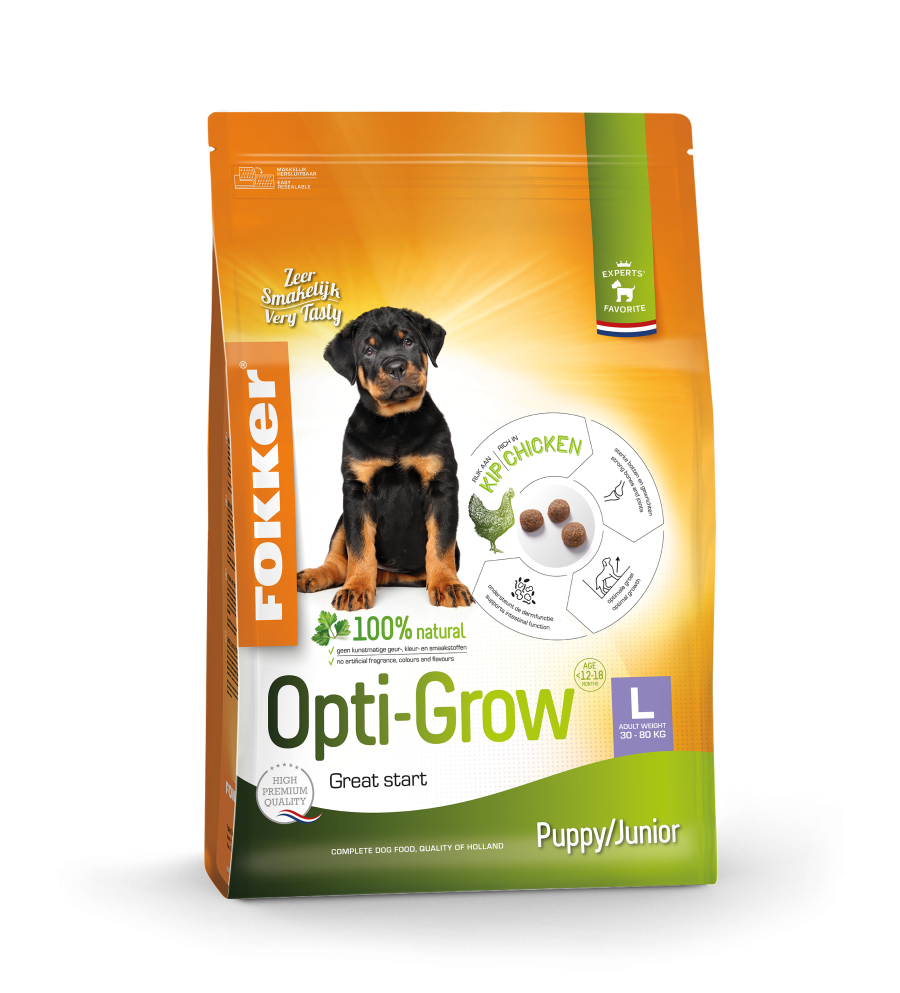
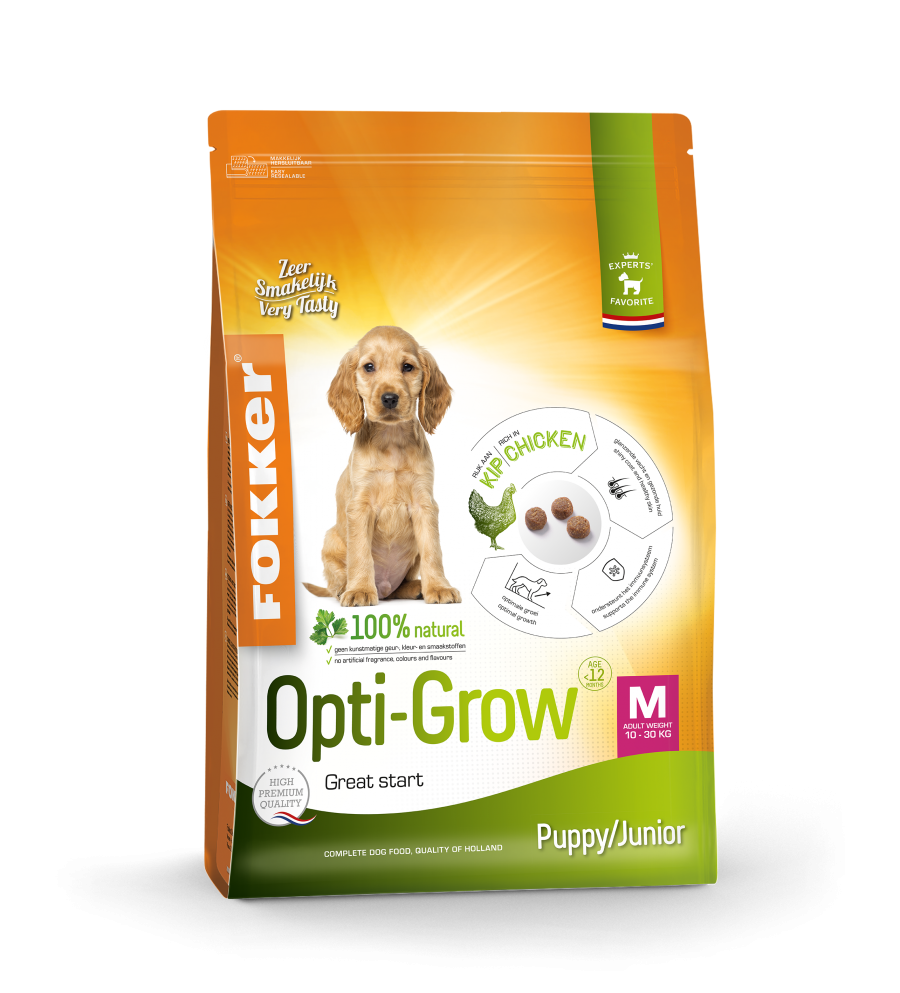
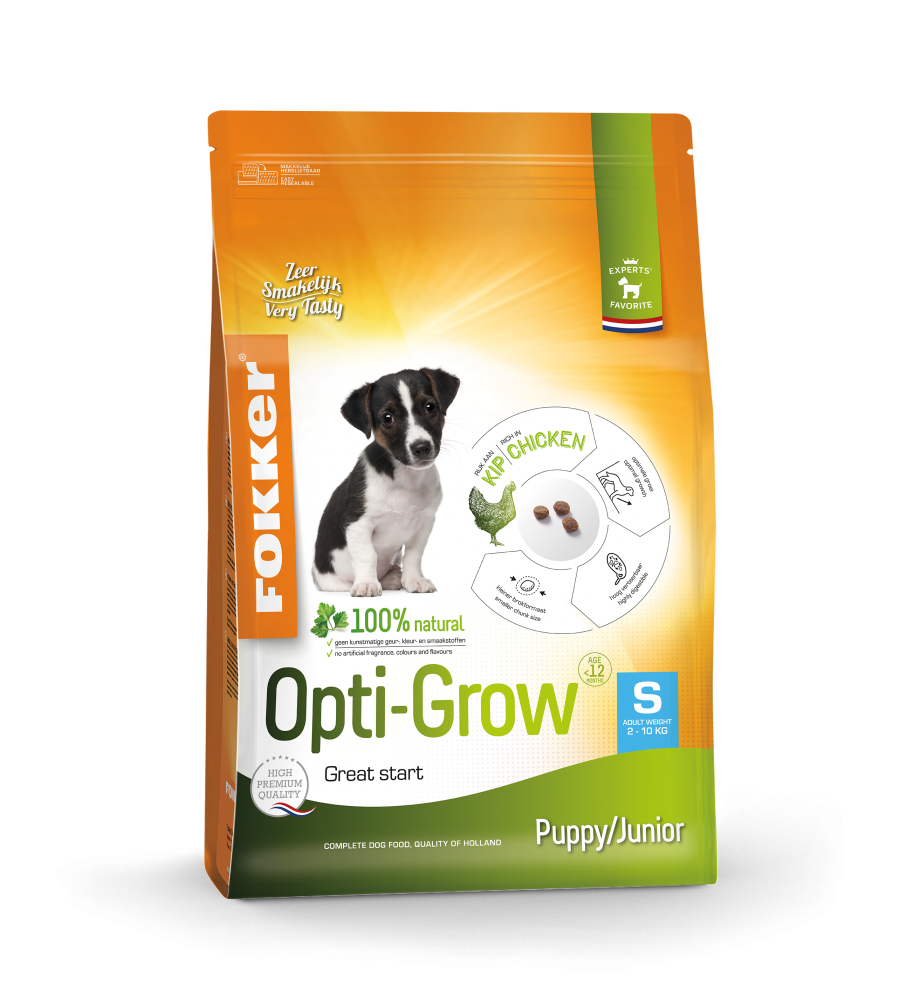
Especially in the growth phase, good food is of great importance for your puppy. Fokker therefore has the special puppy food Opti-Grow. This food is available for small, medium and large dog breeds.
Help, I have a puppy! Of course it is great fun in the first place to have such a small four-legged friend in the house. Yet you also have to deal with a lot of question marks. Especially if you have a dog as a pet for the first time. For example, how fast should a puppy grow? How do you toilet train him? And is it normal for your puppy to bite everything?
To answer your most important questions, we give you FAFP: First Aid For Puppies
Help, my puppy is peeing in the house
FAFP:Potty training is an important part of puppy education. Certainly in the beginning this takes a lot of time. To keep your puppy from going to the bathroom in the house, it's a good idea to go outside every two hours. In addition, pay close attention to the behavior that your puppy displays. Just before a puddle, dogs often sniff the ground and turn in circles. If you see this happening, it is important to take your puppy outside right away. There you can let him do his business. Reward this behavior with a pat or treat to teach your pup that it is good behavior.
Help, my puppy is biting my shoes
FAFP: It is perfectly normal for puppies to bite and nibble on items in the house. Like babies, they discover the world through their mouth and teeth. If your dog is biting things he shouldn't bite, the best method to get rid of it is to get your dog's attention with something else. For example, have a toy or chew stick ready that you can give to your puppy right away when he chews your shoes. Does your puppy bite you while playing? Then stop the game and stand still. This will prevent biting from becoming a way to get your attention.
Order a FREE puppy pack here
Help, my puppy just keeps growing
FAFP: if your puppy is growing like crazy, that's really only good news. To keep a close eye on its growth, it is important to weigh your puppy regularly and go to the vet for checkups. How fast and how long your puppy grows mainly depends on the breed. Small breeds usually mature around their first birthday, larger breeds grow for 18-24 months. The breeder can tell you more about the desired growth of your puppy. In any case, make sure that your puppy gets good food that supports development during the growth phase.
Help, my puppy is fussy
FAFP: one dog eats everything you give him, the other gets his sensitive nose for the very best brand food. First of all, if you have a picky puppy, it is good to find out if there is a medical cause for it. Gum infections or problems with the stomach and intestines can keep your puppy from wanting to eat. If everything is okay, you can try to unlearn the picky behavior. You do this by always allowing the food to stand for half an hour, and then removing it. Just try again later in the day. Usually the appetite is so great that your dog starts eating anyway.
Help, my puppy has gone wild
FAFP: a puppy who runs criss-cross around the room, jumps up against you and takes off when lightning strikes. You almost wonder if he's gone mad ... Don't worry, these are the crazy 10 minutes. Almost every dog ​​has moments when it really gets loose. They swing their toys around, sit still and a little later sprint away at full speed and chase their own tail. Fortunately, this is completely normal behavior. All you have to do is provide a safe environment and enjoy the show your pup is giving away. Oh, and film what your pup gets up to. That way you can laugh about it again in a few years.
First Aid For Puppies: follow your gut
Having a young puppy in the house for the first time brings a lot of new experiences. Above all, remember that having a puppy is a lot of fun. As long as your dog eats, drinks, plays and grows well, it will usually all work out on its own. In addition, regularly visit the vet to keep an eye on the development.
Especially in the growth phase, good food is of great importance for your puppy. Fokker therefore has the special puppy food Opti-Grow. This food is available for small, medium and large dog breeds.
Help, I have a puppy!
Of course, it is first and foremost very nice to have such a small four-legged friend in the house. Yet you also have to deal with a lot of question marks. Especially if you have a dog as a pet for the first time. For example, how fast should a puppy grow? How do you potty train him? And is it normal for your puppy to bite into everything?
EHBP: potty training is an important part of the upbringing of puppies.
Especially in the beginning, this takes a lot of time. To prevent your puppy from doing his need in the house, it is smart to go outside every two hours. In addition, pay close attention to the behavior that your puppy shows. Just before a puddle, dogs often sniff the ground and spin in circles. If you see this happening, it's important to take your puppy outside right away. There you can let him do his need. Reward this behavior with a pet or a treat so that your puppy learns that this is good behavior.
Help, my puppy bites my shoes
EHBP: It's perfectly normal for puppies to bite and nibble on stuff in the house. Like babies, they discover the world through their mouths and teeth. If your dog bites on things he shouldn't bite, the best method to unlearn this is to attract your dog's attention with something else. For example, prepare a toy or chewing stick that you can immediately give to your puppy when he chews on your shoes. Does your puppy bite you while playing? Then stop the game and stand still. This way you prevent biting from becoming a way to attract your attention.
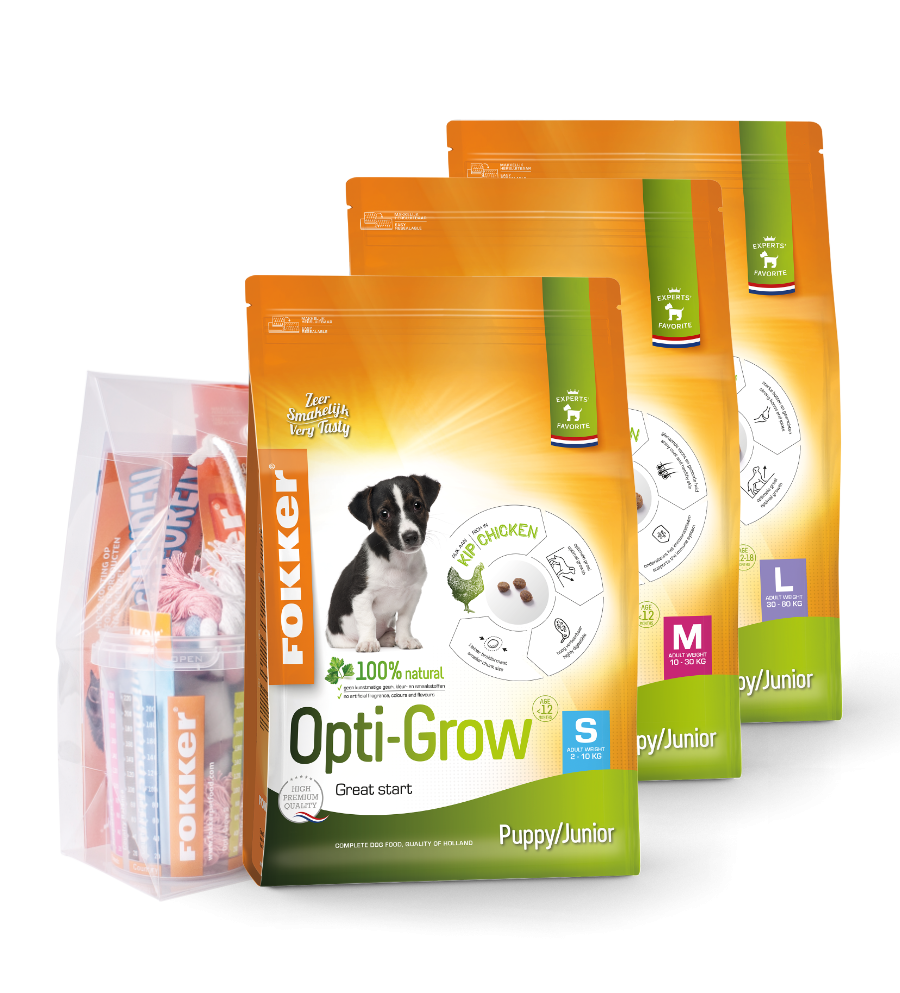
Good nutrition is indispensable and with the right care and attention you will have a buddy for life.
See productEHBP: if your puppy grows like cabbage, that's really only good news.
To keep a close eye on growth, it is important to weigh your puppy regularly and go to the vet for check-ups. How fast and how long your puppy grows depends mainly on the breed. Small breeds usually grow around their first birthday, larger breeds continue to grow for 18 to 24 months. The breeder can tell you more about the desired growth of your puppy. In any case, make sure that your puppy receives good food during the growth phase that supports development.
Help, my puppy is picky
EHBP: one dog eats everything you serve him, the other picks up his sensitive nose for the very best brand food. If you have a picky puppy, it is first of all good to find out if there is a medical cause for this. Gum infections or problems with the stomach and intestines can make your puppy not want to eat. If everything is fine, you can try to unlearn the picky behavior. You do this by always leaving the food for half an hour, and then removing it. Just try again later in the day. Usually the appetite is so great that your dog starts eating anyway.
EHBP: a puppy that crisscrosses the room, jumps up against you and runs off again.
You almost wonder if he's gone crazy... Don't worry, these are the crazy 10 minutes. Almost every dog has moments when he goes completely wild. They swing their toys around, sit still and sprint away at full speed a little later and hunt their own tail. Fortunately, this is completely normal behavior. All you have to do yourself is provide a safe environment and enjoy the show your pup is giving away. Oh, and filming what your puppy is doing. So you can laugh heartily about it in a few years.
Puppy First Aid: Follow Your Feelings
Having a young puppy in the house for the first time brings a lot of new experiences. Remember that it is especially nice to have a puppy. As long as your dog eats, drinks, plays and grows well, it will usually all work itself out. In addition, go to the vet regularly to have the development monitored.
Especially in the growth phase, good food is of great importance for your puppy. Fokker therefore has the special puppy food Opti-Grow. This food is available for small, medium and large dog breeds.
Of course, a nice meal is in itself a bright spot in your dog's day. Fokker has feed for every stage of life, specific nutritional needs and even for real gourmets.
Signing up is agreeing to our conditions.